Your floor is part of your brand
Customers notice floors more than most business owners realize. A clean, consistent surface signals care and professionalism; stained grout, chipped tile or dusty concrete suggests the opposite. Floors also shape daily operations: how long cleaning takes, how often slips happen, how quickly a space recovers after a busy day.
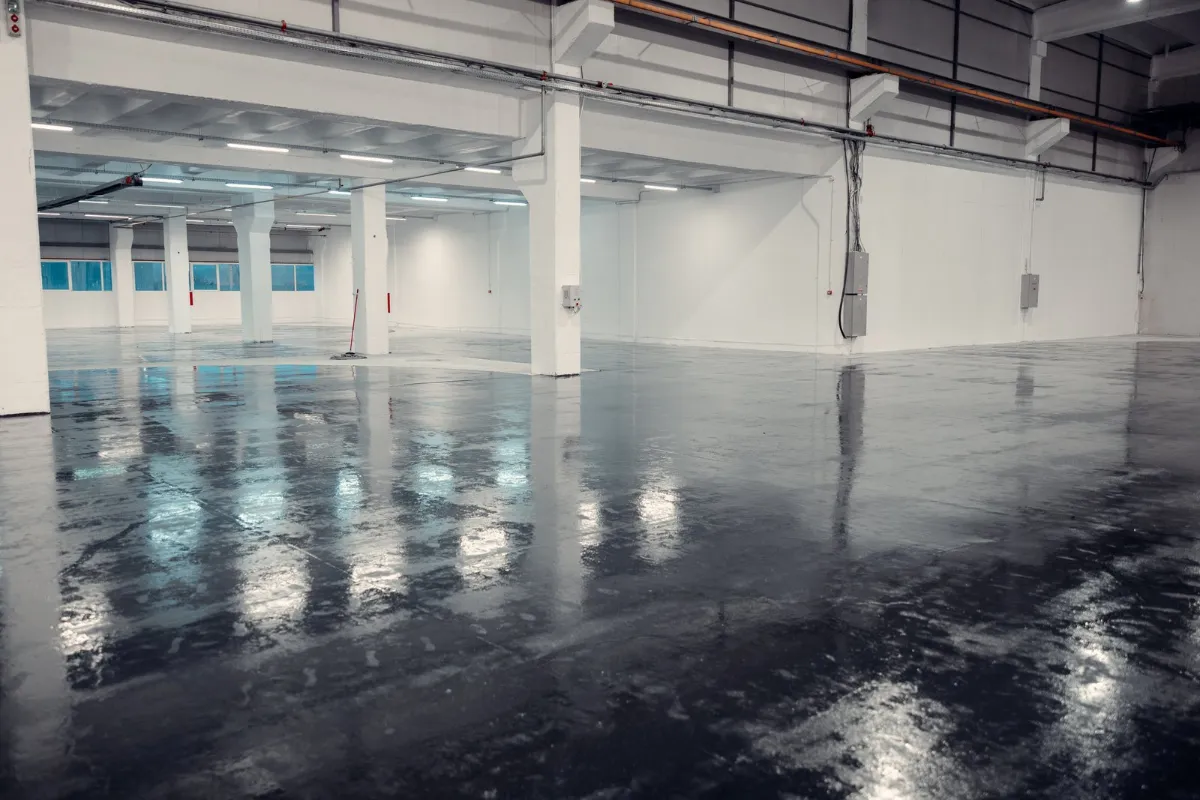
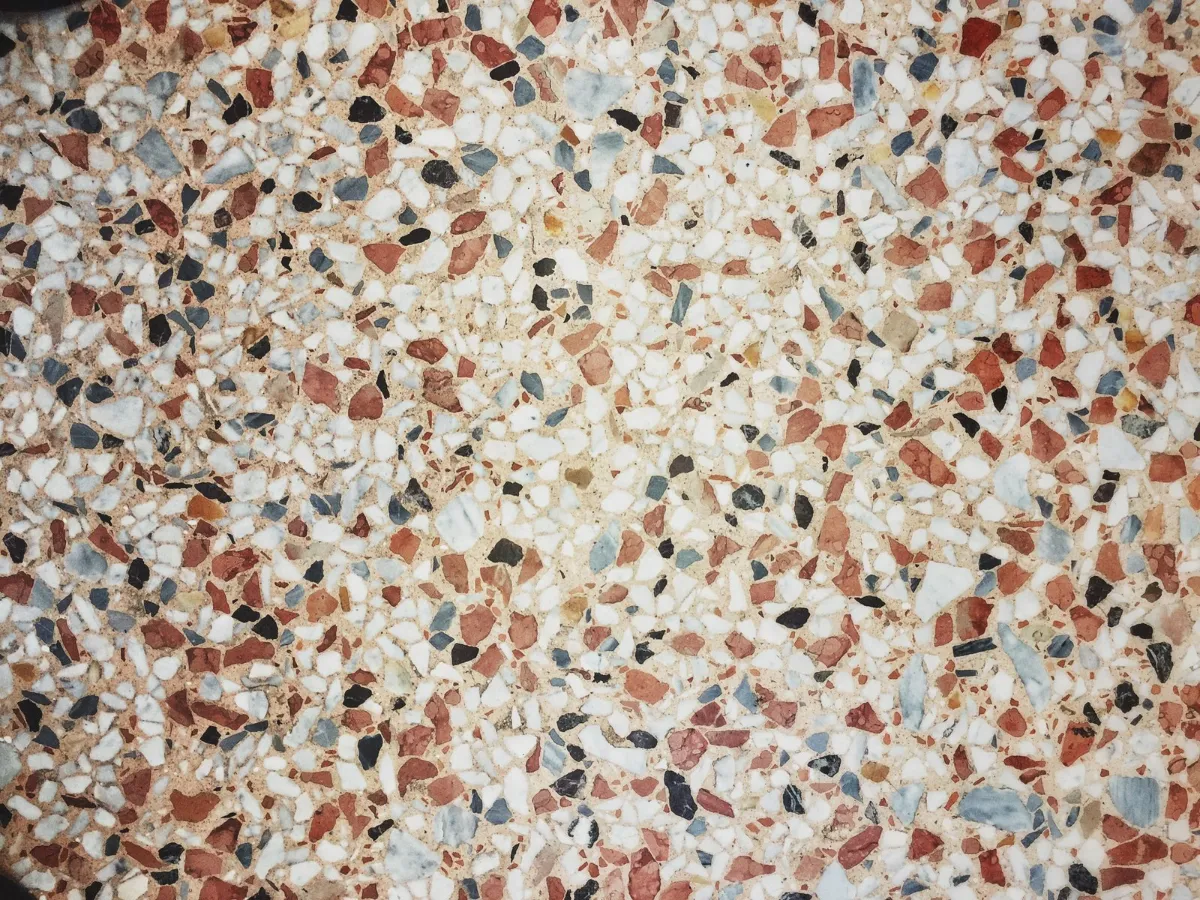
Commercial epoxy systems handle all of this. They form a seamless, nonporous surface that resists spills, chemicals and constant foot traffic. They can include texture for safety, a cove base for sanitation, and colors or metallic effects that reflect your brand. Anthem’s shopping centers, restaurants, salons, gyms, clinics and service shops all have different demands, and we tailor each system accordingly.
Benefits for businesses
Faster cleaning
No grout or seams — floors mop or auto-scrub quickly at the end of the day.
Chemical resistant
Holds up to disinfectants, hair color, degreasers and automotive fluids.
Safer footing
Textured finishes reduce slip risk in kitchens, entries and wet areas.
Brand presence
Custom colors, logos and metallic effects make a memorable impression.
Durable
Stands up to carts, chairs, equipment and heavy foot traffic.
Hygienic
Integral cove bases eliminate the dirt-trapping joint at the wall.
Systems by business type
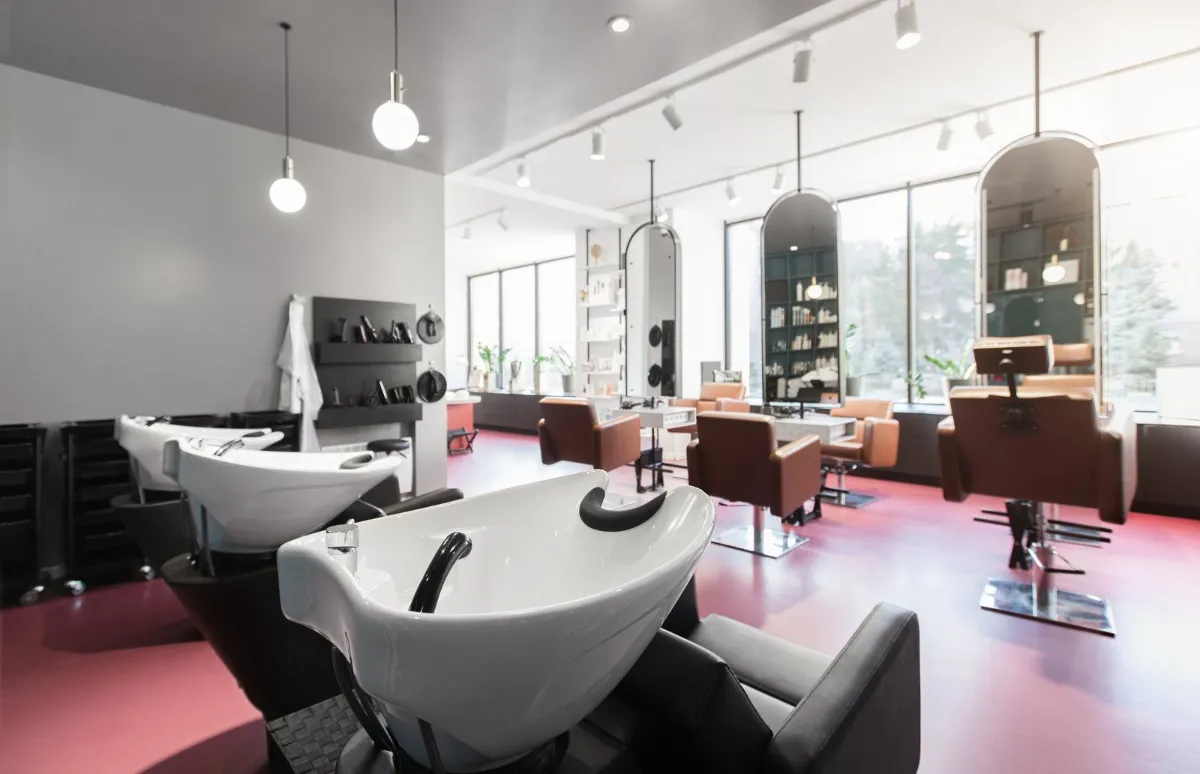
Salons and spas
Chemical-resistant topcoats that tolerate hair color and cleaning products, in flake or metallic finishes that look upscale.
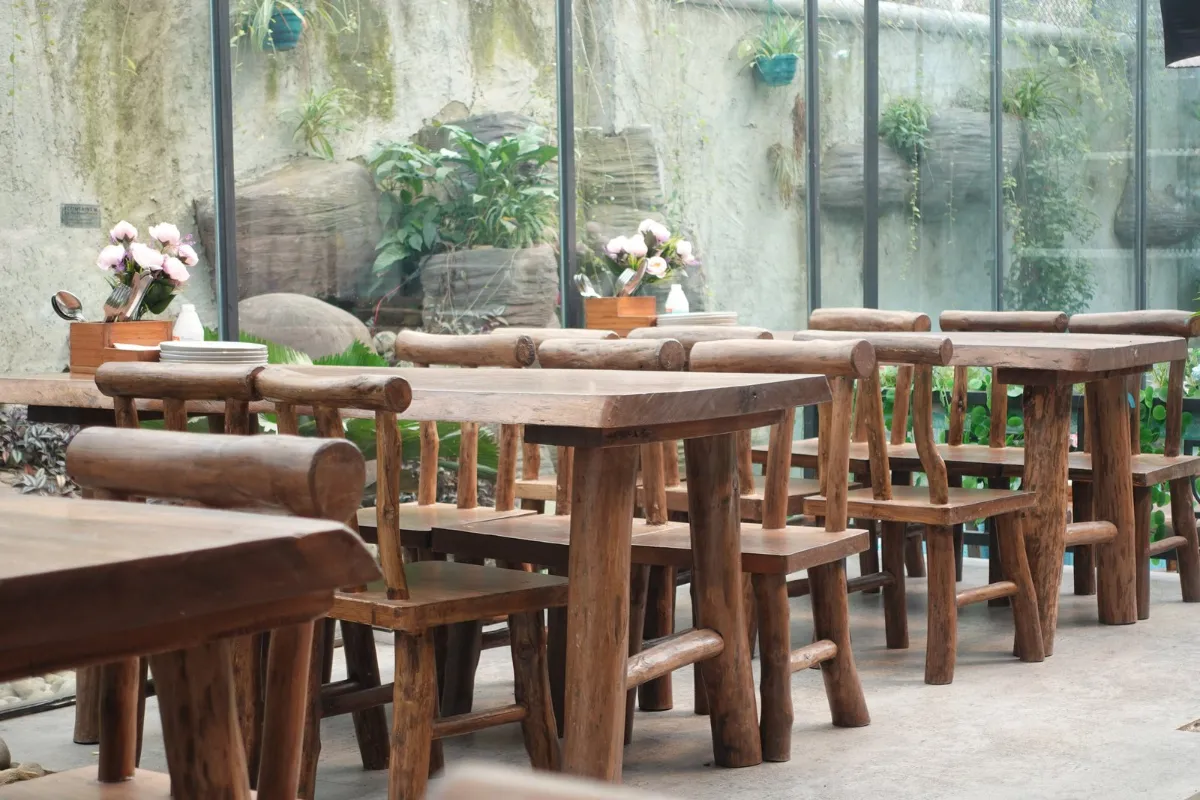
Restaurants and cafés
Urethane cement or heat-tolerant systems for kitchens with hot-water washdowns, plus decorative finishes for dining rooms.
Fitness studios and gyms
Tough, textured coatings for functional training areas, combined with rubber flooring where heavy lifting happens.
Medical, dental and veterinary
Smooth, disinfectant-resistant floors with cove bases and low-glare satin finishes.
Auto detailing and service
Heavy-duty systems resistant to oils, solvents and hot tires, often in light colors for visibility.
How we run a commercial project
- 01
Walkthrough
We review the space, slab, chemicals, cleaning routines and any requirements from your landlord or inspectors.
- 02
Schedule around you
Nights, weekends or phased work keep you open. Fast-cure products shorten closures.
- 03
Prep
Old flooring and adhesive are removed, and the slab is ground and repaired.
- 04
Install
Primer, body coats, decorative or textured layers and topcoat are applied to specification.
- 05
Detail
Cove bases, logos, color zones and markings are completed.
- 06
Reopen
We confirm cure times and provide cleaning guidance for staff.
Choosing the right chemistry matters
The most expensive commercial floor is the one that fails in the first year. Garage-grade products can go soft under scalding rinse water, pick up permanent tint from color treatments, or scuff thin under all-day cart traffic. Pairing chemistry with conditions is the decision that makes or breaks a commercial floor; looks come second.
We also understand that every day closed costs money. Experienced commercial installers plan the work, coordinate with other trades and finish on schedule. That’s the standard we hold ourselves to.
In commercial work, the right chemistry is worth more than the right color.
Commercial flooring in Anthem
Anthem’s commercial centers serve a busy, family-oriented community, and many businesses see heavy traffic on weekends and after school. Floors at entrances collect desert dust and, during monsoon season, water. Sealed, textured finishes near doors and good walk-off mats keep the rest of the space looking clean.
Many tenant spaces are in shopping centers with landlord requirements for contractors and work hours. We’re used to providing documentation and scheduling around center rules so the project goes smoothly for everyone.
Maintenance for commercial floors
Daily dust mopping and damp mopping or auto-scrubbing with a neutral cleaner keep floors looking new. Avoid harsh solvents and aggressive pads. Busy shops benefit from a fresh clear layer every few years, timed before foot traffic reaches the color beneath; it costs a fraction of a full redo.
What affects cost
Pricing depends on the existing flooring to remove, slab condition and moisture, the system’s thickness and chemistry, decorative options such as metallic or logos, cove bases and scheduling requirements like night or weekend work. Our proposals itemize each factor so you can compare options and plan your budget.
Studios, gyms and multi-use tenant spaces
Fitness studios, dance and martial-arts schools, and kids’ activity centers are a growing part of Anthem’s retail mix. These spaces often combine a lobby, restrooms, an office and one or two large activity rooms. Each area can benefit from a different finish: a decorative, easy-clean coating in the lobby, a textured, chemical-resistant floor in restrooms, and a tough coating under rubber matting in training areas.
Planning these zones together keeps the space looking cohesive while giving each room the performance it needs. We can also coat storage and utility rooms with a simpler, lower-cost system so the budget goes where customers will notice it.
Working inside a shopping center
Most Anthem businesses lease space in a center with a property manager and a set of contractor rules. Common requirements include proof of insurance, approved work hours, protection of shared walkways, and notice before noisy or odorous work. We’re familiar with these processes and provide the paperwork up front so approval doesn’t delay your opening or remodel.
We also coordinate with your other contractors. Floors generally go in after the messy trades — drywall, electrical, plumbing rough-in — and before fixtures, shelving and furniture. Getting that sequence right protects the new floor and keeps the overall project on schedule.
A quick guide to commercial finishes
Not sure where to start? Here’s how we usually think about finishes for common spaces.
- Customer-facing retail and lobbies — decorative flake or metallic with a satin topcoat that hides scuffs
- Restrooms — textured flake with a cove base for easy sanitation
- Kitchens — urethane cement with slip-resistant texture and integral cove
- Back-of-house and storage — a durable solid-color coating at a lower cost
- Service bays — heavy-build, chemical-resistant systems in a light color
Safety, accessibility and first impressions
Entrances are where most commercial slips happen, especially when monsoon rain gets tracked inside. Grippier finishes go where water shows up — doorways and restrooms — and slicker, quicker-to-mop finishes stay in the dry zones. Seamless coatings also remove raised grout lines and loose transitions that can catch strollers, wheelchairs and walkers — a meaningful detail for businesses that serve families and older customers alike.
Color plays a role, too. Slight contrast between floor and baseboard helps visitors judge where the room ends, and an even, unbroken surface makes compact spaces breathe. Small decisions like these add up to a better experience for every visitor.
Medical and wellness offices
Clinics, dental practices, physical therapy studios and veterinary offices need floors that can be disinfected repeatedly without breaking down. We use dense, nonporous coatings with integral cove bases so cleaning reaches every corner, and satin topcoats that reduce glare under bright exam lighting. Exam rooms, corridors, sterilization areas and restrooms can each receive the finish that suits them, all installed outside patient hours.
Planning a remodel or new build-out
If you’re opening a new location or remodeling, involve your flooring contractor early. Knowing the floor system in advance helps the architect or designer plan drains, thresholds and transitions, and it lets us test the slab before other trades arrive. Early coordination also locks in the schedule so the floor goes down at the right moment in construction.
Common questions
Can you work after hours?
Yes. Nights, weekends and phased schedules are standard for our commercial projects.
Do coated floors work in restaurant kitchens?
Yes, with the right system. We recommend urethane cement or heat-tolerant coatings for kitchens with hot-water washdowns.
Can you include our logo?
Logos, brand colors and zones can be incorporated into many systems.
How long will we be closed?
Small spaces can often be completed over a weekend; larger spaces can be phased.
Will the coating smell?
We use lower-odor products where possible and schedule strong-smelling steps after hours.
Can you coat just one area of our business?
Yes. Many clients start with the area that needs it most — a kitchen, restroom or service bay — and coat other areas later.
How do we clean a commercial coated floor?
Daily dust mopping and damp mopping or auto-scrubbing with a neutral cleaner. We provide written guidance for your staff after installation.
Can you work around inspections?
Yes. We coordinate with your general contractor so floor work fits around inspections and other trades.
Do you offer maintenance recoats?
Yes. For busy businesses we can schedule periodic topcoat refreshes, usually after hours, to keep the floor looking new and extend its life.